Piraeus Ferry Port Guide
Piraeus is the main ferry port for Athens and the busiest passenger port in Europe, with 66 scheduled connections in our route database — from a 35-minute run to Aegina to sailings that take the best part of a day.
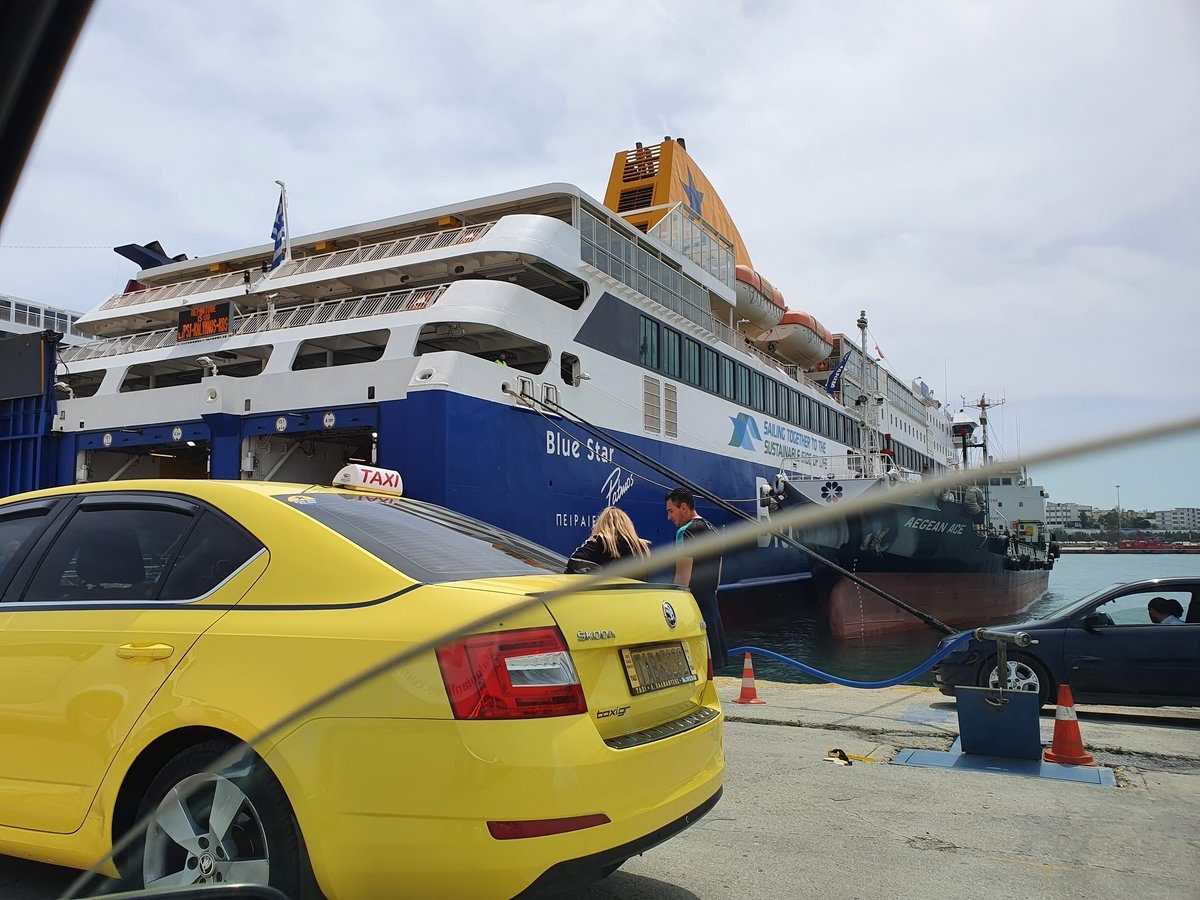
Most Greek island trips start here, and most of the problems people have with Piraeus come down to the same two things: not knowing which gate they need, and underestimating how long it takes to cross the port on foot. This guide covers the gate system, the ways in from central Athens and the airport, ticketing, and how long the main crossings actually take.
The Gate System
Piraeus is not a single terminal building. It is a working harbour ringed by numbered gates, E1 through E12, each serving a different group of destinations. Broadly, E1 handles the Dodecanese; Crete and north-east Aegean ferries sail from the E2 area, the Saronic boats go from E8, and the Cyclades departures sit somewhere in the middle of that run. E11 and E12 at the southern end are mostly cruise ships.
The important word there is "broadly". Gate assignments are not fixed. Operators get moved between gates in high season and when the port is under pressure, and published gate lists go out of date quickly. Your ticket or booking confirmation should name your gate, and the electronic display boards at the port entrance are updated on the day. Trust those two, not a number you read in an article six months ago.
Why You Need to Arrive Early
The port runs roughly 2 km end to end. If you are dropped at the wrong end of it with a suitcase, you are looking at a 20 to 45 minute walk in whatever the weather is doing. There is a free internal shuttle bus that loops between the metro area and the more distant gates, running every 10 to 15 minutes at peak times, and it is worth using rather than walking if your gate is a long way off.
Conventional ferries typically open boarding 30 to 45 minutes before departure; high-speed catamarans often only 15 to 20 minutes before. Those windows assume you are already standing at the right gate. Allow an hour at the port for a foot passenger and 90 minutes to two hours with a vehicle, more in July and August when the access roads back up.
Getting to Piraeus
There are three rail options and they all end up in more or less the same place, just outside the port near Gate E5.
Metro Line 1 (the green line) is the traditional route from Monastiraki and Omonia, and terminates at Piraeus station. Metro Line 3 (the blue line) was extended to Piraeus in October 2022 via Dimotiko Theatro station, which gave the port a second, faster connection from Syntagma and the airport end of the network. Plenty of older guides only mention Line 1, so it is worth knowing the blue line now runs here too.
Suburban rail (Proastiakos) links the airport directly to Piraeus in about an hour, running roughly hourly through the day for around €9. It is the simplest airport option if the timings suit you.
The X96 express bus runs between the airport and Piraeus 24 hours a day, every 30 minutes or so in daylight and hourly overnight, for a flat €5.50. It picks up right outside the arrivals hall. It is the cheapest way in and the slowest, at 90 minutes to two hours depending on traffic, but the round-the-clock service makes it the default for early sailings and late landings. Taxis run the airport route in about 40 minutes for roughly €60 by day.
One local habit worth adopting: walk away from the cruise gates before you hail a taxi. Cabs waiting there often only want fixed-price city tours.
Tickets
E-tickets are now the norm across the Greek operators. Check in online a day or two ahead, get a QR boarding pass on your phone, and board with it directly. Paper collection from a kiosk near your gate still exists as a fallback if you have no e-ticket or online check-in is down, but for most travellers the printing step has gone.
Ferry Routes from Piraeus
The Saronic islands are the quick ones and the reason Piraeus works as a day trip port. Aegina is 35 minutes on a fast boat, Agistri 50 minutes, Poros just under an hour, Hydra an hour and five, and Spetses about an hour and a half.
For the Cyclades, fastest crossings run to Syros in 1h55, Paros in 2h35, Mykonos in 2h40, Milos 2h30, Naxos in 3h15 and Santorini in about 5 hours. Those figures are high-speed times. Conventional ferries on the same routes take considerably longer, often half again or double, and they are usually cheaper, steadier in wind and better if you have a car.
Beyond the Cyclades the sailings get long. Chios is around 7 hours, Heraklion in Crete 7h25, Chania (Souda) 8 hours, Mytilene on Lesvos and Kissamos in western Crete closer to 10. Rhodes is 12h15, and the Thessaloniki service is over 30 hours. Most of these run overnight with cabins, which is the sensible way to do them.
For an overview of the wider network and where else you can sail from, see our Greek ferry ports index.